by Phil Knight, ghost written by J.R. Moehringer
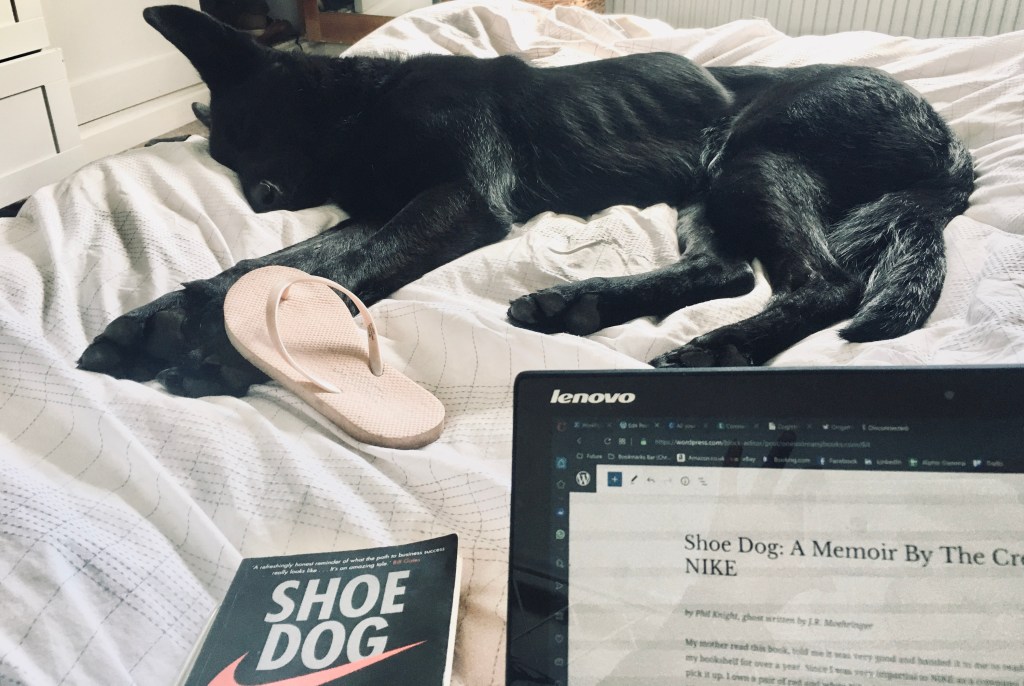
My mother read this book, told me it was very good and handed it to me to read. It was sitting on my bookshelf for over a year. Since I was very impartial to NIKE as a company, I had no motivation to pick it up. I own a pair of red and white Nike Airs, but they are a bit too tight around my toes so I never went running in them; they are just fashion. However, recently we’ve had a lot of glorious sunshine, so reading in the garden in the morning sun has become my ritual, and because I have this odd fear my Kindle Fire will overheat, Shoe Dog came off the shelf.
I was not disappointed. The book is remarkably well written. It reads like a novel, but instead is a true, fascinating story about a business. There is a preconception that CEOs and entrepreneurs are extroverted, amazing at sales and know exactly what they want. Phil Knight completely blows that idea out of the water; he is an introverted, ordinary guy, terrible at selling encyclopedias, has nervous ticks, and never really knew what he wanted except that he just wanted to win. This alone should give anyone the comfort to start a business and make it a £30 billion global company.
Phil Knight: A Woeful Summary of an Extraordinary Journey
Born in 1938, he is proud to be born in Oregon state, where apparently only a handful of people have achieved mega success. He’s a bit of an education snob, and judges people based on the university they go to, he himself, went to the University of Oregon where he met his track coach, Bill Bowerman. Then, later impressively, went to Stanford. It was here, as an assignment, he created the business plan to manufacture shoes in Japan and disrupt the shoe market in the USA. It got him good marks from his professor, but that wasn’t enough. The idea never left him, and circled around his brain long after graduating. Pitching this idea to his family, his Dad agrees to pay for his travels around the world (not really buying into the company idea, his Dad personally regrets not travelling in his youth, so supports his son to do it). Phil and a friend Carter set off on a round-the-trip adventure, which stops after the first flight landing in Hawaii. They entirely change their plan and end up staying there, and get jobs as salesmen. Here, is where being bad at sales was a blessing in disguise. Had he been good, he would have copied his friend and settled down in Hawaii, but because he couldn’t make enough to sustain a living, he returned to the original plan, minus Carter, and flew to Japan.
He read book 101 about dealing with the Japanese, lied to the board that he had a company called Blue Ribbon, and hen they gave him the rights to sell their shoes called Tigers in East Coast America. He travelled round the world, visited the Temple of Nike in Athens, then returned home to start his company. This was in 1962. The brand NIKE didn’t exist until 1971 after a clash with their Japanese suppliers. The company didn’t go public until 1980, so it took 18 years for Phil to grow his personal net-worth from zero to $178 million. The book ends here, with only a short final chapter of his thoughts now after stepping down as CEO. After all, we all know the history of NIKE inc. after it became public.
Lessons Learnt
Okay, so that’s the biography of Phil Knight in less than 350 words. It’s up to you to read the book and find out the details. I have definitely done it an injustice by summarising his life so nonchalantly. However, without it, the lessons I learnt won’t make much sense.
It’s a shame only one person ever really goes down in history as founder of a company. NIKE wouldn’t exist without Bill Bowerman or Johnson. This books details how with Phil alone, NIKE wouldn’t even be a word in the English language (it would remain Greek, atop the acropolis). It was the connection with an Olympic track trainer who was already obsessed with improving running shoes. He was building and testing his inventions on his team long before Phil was even running! Also, by affiliating with Bill, it was easier to obtain celebrity endorsements and to be invited to attend running events as a shoe seller.
Johnson is probably the only character in the book which perhaps does possess superpowers. He was a down-for-whatever kinda guy, but to the extreme. He packed his bags and moved to the other side of the country multiple times just because Phil asked him. He endured years of writing to Phil for advice, updates and attention, and never receiving a single letter of appreciation in return. His father was unhappy with the deal, and demanded Johnson receives more equity and higher pay. When Phil refuses, Johnson dismisses the debacle and happily continues doing the job. Johnson really is the knight-in-shining armour for the business, driving sales, design, marketing and branding. I feel perhaps Phil exaggerated his lack of gratitude towards him, I find it hard to believe anyone is that foolhardy to devote themselves to someone else’s company and receive little in return. Or perhaps, people like Johnson do exist, in which case, I want to read his autobiography and understand his psyche.
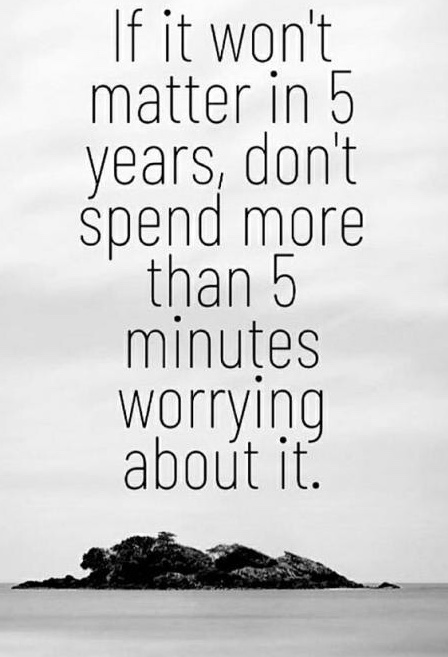
I was surprised to read that both the name NIKE and the swoosh logo were actually rather rash decisions, and not even invented by Phil, . So, don’t dwell over details. After finishing the book, I came across a quote, which is now on my phone lock screen to remind me each time I make a decision.
Phil scatters many of his own quotes he’s created and collected throughout the book. Here are my favourites:
“You are remembered for the rules you break”
“Life is growth. You grow or you die.”
“Business is war without bullets”
“Like it or not, life is a game”
“Let everyone else call your idea crazy… just keep going. Don’t stop. Don’t even think about stopping until you get there, and don’t give much thought to where “there” is. Whatever comes, just don’t stop.”
“The single easiest way to find out how you feel about someone. Say goodbye”
“Somebody may beat me. But they’re going to have to bleed to do it.”
“When you only see problems, you’re not seeing clearly”
“I’d tell men and women in their mid-twenties not to settle for a job or a profession or even a career. Seek a calling. Even if you don’t know what that means, seek it. If you’re following your calling, the fatigue will be easier to bear, the disappointments will be fuel, the highs will be like nothing you’ve ever felt.”
I am, in no way, comparing myself to Phil Knight or alluding that I could be the next big shoe company. Nevertheless, we share very similar initial stories, whilst studying for a graduate degree we both were given an assignment to create business, which we got obsessed with. I started a company called Danzarin, selling tango shoes to the UK Argentine Tango community (trying to) disrupt the overly expensive, bespoke ideology of dance shoes; he wanted to disrupt German shoes (Adidas) with Japanese manufacturing, similar to what Kodak did. Big difference is: You know Nike, and never heard of Danzarin. It is comforting that my crazy idea, wasn’t all that crazy, and actually, with dedication, might actually be feasible. Has the book inspired me to reopen my company though, perhaps not! . . .
Conclusion
Starting a business doesn’t require you to have exceptional qualities. BUT, it does require you to have exceptional perseverance and determination. Reading Shoe Dog made me realise just how much doggedness (pun maybe intended) you need to be successful. It took 18 years of living at a zero bank balance, putting his house on the line, risking the future of his wife and two children, regretting forever for not spending enough time with his sons as they grew up, facing court, fines and fraud, losing friends and colleagues. Phil and his team went through A HELL OF A LOT to get to where they are. I can imagine, the average person does not want to risk all those things for a stab in the dark at being a multi-millionaire. And that, is exactly why, the average person is not a millionaire. It takes guts, grit and grind to achieve what NIKE have!
The honesty that Phil Knight exudes is what puts this biography amongst the top I’ve read. He confesses the many lies he had to say in order to secure deals. He’s not afraid to admit his mistakes or his shortcomings and confesses when he didn’t praise his colleagues or when he asks his wife to spend another day in hospital after having their second son so he could go to a game. He reminds me that at the end of the day, we are all human. It’s the people we surround ourselves with, the trust and strength of those relationships is what gets us through life.
As a book to learn from, I’m not sure the lessons learnt are altogether relevant to today’s world. I highly doubt you can lie your way into securing supplier deals and bank loans anymore. Also, which Phil does agree with, a lot of his success is down to luck. Luck that he had such close connections with the running world and who were also willing to build the company with him. Luck that someone at Nissho Iwai saw the company as their business child and hid the invoices to keep the company afloat. Luck that Nissho chose to pay off the debt NIKE accrued to the Bank of California. Luck that Blue Ribbon won the court case against the Japanese despite lying and stealing. To be honest, Phil Knight and co. were doomed to fail. It is hard to read the book and not believe in the quote he repeats himself throughout:
“Have faith in yourself, but also have faith in faith. Not faith as others define it. Faith as you define it. Faith as faith defines itself in your heart.”
Phil is admiringly open about his personal life, his marriage and relationship with his sons. There are many books and articles about women having to choose between career and family. It was refreshing to read that men face the same dilemma too. I shed a few tears reading the last few pages; losing a child is possibly the toughest circumstance any human may endure. The writing is poignant, as you read throughout his life he regrets not spending time with his children, how he never really connected with them, they hated sports because it took their Dad out of the house, and his son never found his “calling” before he died. I can’t imagine his heartbreak.
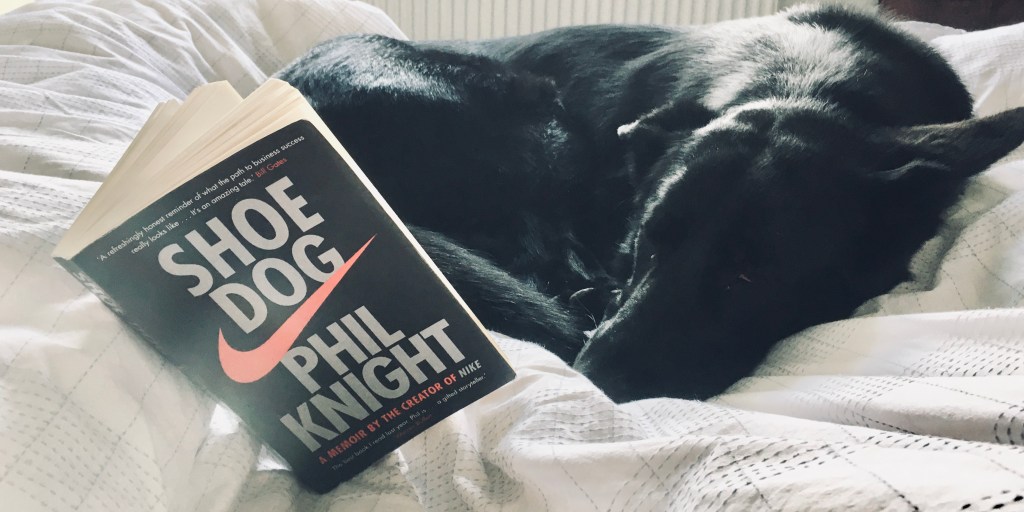
After reading Shoe Dog, I’ve started noticing the shoes people wear, and now have a new found appreciation for NIKE. I will go dust off my NIKE Airs. To summarise the book though, it is an exceptionally well-written memoir by a brilliant mind who truly encompasses the saying JUST DO IT.
 One Too Many Books