
Based on the memoirs of Ernesto “Che” Guevara
Obsessed with Argentine Tango, travelled to Argentina in 2018 and have an Argentinean boyfriend; it was inevitable I was going to have to learn about their culture, history and country. The first Argentinian movie I watched was “The Secret in Their Eyes”, by Juan José Campanella. It was a brilliant movie, highly recommend. But you learn nothing about Argentina, except their cliches: Red wine and football. I’ve also watched a ton of tango movies, one comedy called “La Cuenta Chino”, (which was a great test of my Chinese and Spanish. But to really learn about the country, I started off with their politics, and a movie called “The Motorcycle Diaries”.
Intrigued by the movie, I set about reading the book of which it is based. One point to note is the title should really be called “The Diaries”, as the motorcycle crashed in the first chapter they set off! I want to keep this post politically neutral, but it did make me realise how little I know from school history lessons of the “opposing” sides during the anti-communist wars. Considering Guevara was so instrumental in the Cuban revolution, he seems to be lost in Western history. A mythical figure which American’s don’t want to remember in this history books. However, it seems, within South America, he is very much not forgotten about, and his name is frequently referenced in literature, media and music.
Summary of the book
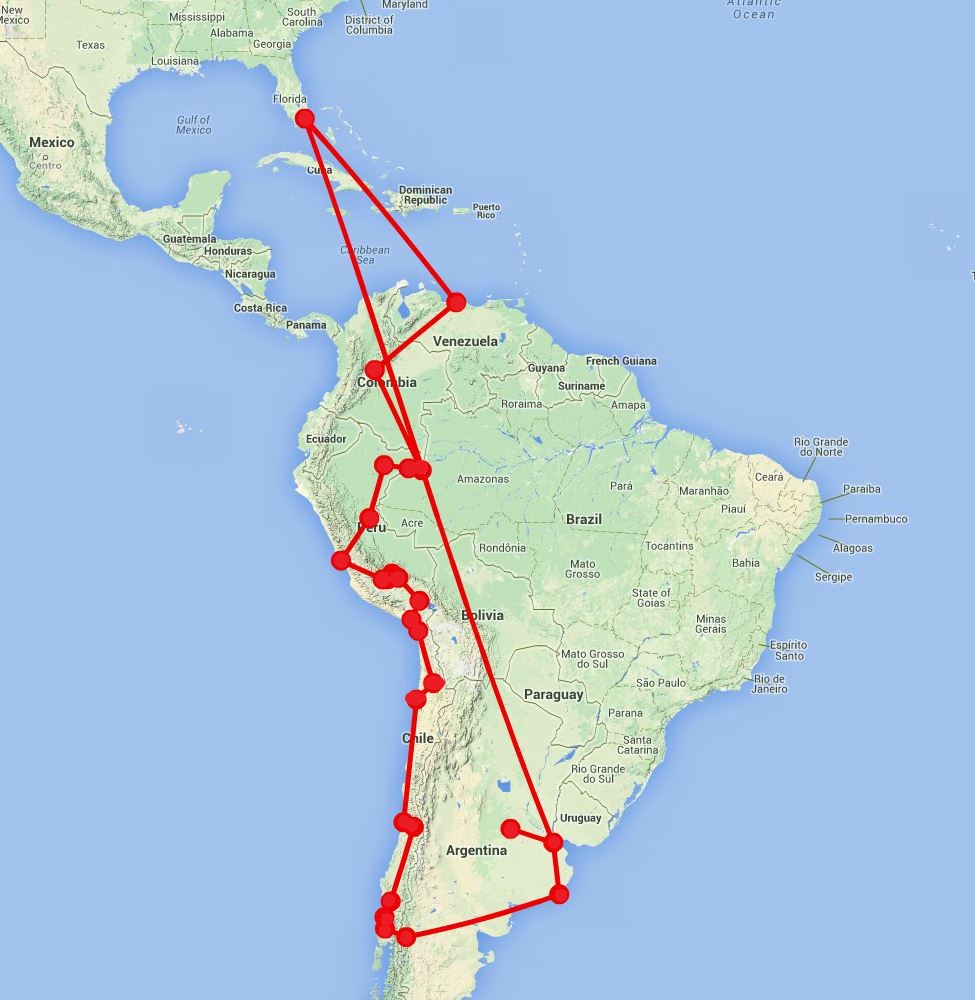
Set in 1951-52, this is the diary of the Argentine doctor and revolutionary, Ernesto Guevara, also called “Che”. Alongside his friend, Alberto Granado, with only a motorcycle and a bag each, they set about a treacherous travel around South America. Leaving from Argentina, crossing the Andes to the other side in Chile, then heading up to Peru, Colombia and Venezuela. Through the long journey, Che experiences several aspects of life in South America, and the diary sees the development of his revolutionary outlook in life.
As someone personally very interested in South American culture, it helped that I was quite familiar with the places Che and Granado visited, Reading about Che’s impressions of Cuzco made me dearly want to get on the next plane and visit the place myself. I love visiting authentic, relatively untouched places in the world, and judging from what he wrote, it seems that little has changed over there!
He started his journey bringing his middle-class background and rose-tinted glasses into the world. But after facing the grim realities of South America, the way the indigenous people are treated, and the life of the poor and sick, he gradually evolves his thinking into Marxism.
Personally, I have a liberal, not-strongly-for-or-against view of Marxism and Communism. Brought up by a Capitalist British father, and Communist China mother; I learnt the positives from both systems. I could sympathise with Che, especially from a life science background myself, seeing the poverty and unfairness in the world is indescribably painful. People dedicate their entire life to fight this inequality, Che being an example. One can argue until their face is blue that Communism won’t work because of human nature, economy, etc etc. but it surely is on paper, in the most idyllic world, in the utopia of all fictions, the best system, isn’t it?
Looking back at history, we see how several Communist states became corrupt; it was never a place where everything is equal. However, I can also see Che’s point of view: If you’re on the bottom end of the social spectrum, you would wish that life were a little bit easier, hoping that those living the luxury lifestyle would allow their money to trickle down to your own plate.
The diary itself is poorly written, you can tell he did not intend it to be for a wider audience and has been extensively edited. I was expected to read a flippant diary of someone that writes and writes and writes non stop, about everything he sees and does, all his thoughts, political, about other woman, about his friend. But instead, he crams nine months of travelling, five countries, into 160 pages, yet, still it is rather repetitive. He writes largely a monologue of the exact travel itinerary, with little opinion besides,”I liked them”, “They didn’t like us”, “They gave us food”, “We drank wine together”. Reading his diaries, honestly seemed more like a story of how they moved from place to place in search of food and a place to sleep. It was humorous to read him always talking about eating, and drinking, and refusing to drink wine unless he was eating. Perhaps, when you are always hungry and tired, that is all you think about though once you put pen to paper!
It’s not all bad! There are some very eye opening parts, I just wish he elaborated more. I was amazed by the compassion he showed to everyone he met. In an era where fairness, good working conditions, minimum wage did not exist, he saw this injustice and naturally felt this empathy for them. These are the traits of someone you know will make a difference in the world! For example, Che pitied a guy forced to carry all the luggage while he party travelled horseback, and Che actually took the luggage from him to carry himself. He showed compassion towards the mine workers in such horrible conditions. And of course, famously, the kindness he showed to the leprosy patients. It’s almost Jesus-like.



Overall though, the style of writing is hasty and unconsidered. It was as if his mom asked him to keep a diary of his travels, but he really didn’t want to. So just wrote some passages to keep her happy! What opened my eyes, was the reading I did during and after reading the book about Che, what he stood for, the things he did until the end of his life. I was not prepared to meet a man so deeply committed to the cause, without bothering which country he was fighting for. An Argentine who fought for Cuba, went off to fight in Congo, then yet another warfare in Bolivia.
If it was anyone else’s diary, I would probably never have even picked it up. It was only because I was so interested in understanding South American culture and to read something from Argentina, that I persisted until the end. If you want to just know what Che did, I think you will get more information about him from his Wikipedia page than from reading this book. And if you want to read about the famous cities of South America, probably stick to a travel blog.
However, I would read it to attempt to gain insight into a remarkable man who was as passionate and compassionate as he was intelligent. A man who cared more for the sorrows of the poor than his own comforts. A man daring and determined. A man who was selfless to the very core. A man who abandoned his family, his children, his clearly prosperous, comfortable life to serve an ideology.
A man who has not been adequately honoured in history.
“In nine months of a man’s life he can think a lot of things, from the loftiest meditations on philosophy to the most desperate longing for a bowl of soup — in total accord with the state of his stomach. And if, at the same time, he’s somewhat of an adventurer, he might live through episodes of interest to other people and his haphazard record might read something like these notes.
Passage from “The Motorcycle Diaries” by Ernesto “Che” Guevara
And so, the coin was thrown in the air, turning many times, landing sometimes heads and other times tails. Man, the measure of all things, speaks here through my mouth and narrates in my own language that which my eyes have seen. It is likely that out of 10 possible heads I have seen only one true tail, or vice versa. In fact it’s probable, and there are no excuses, for these lips can only describe what these eyes actually see. Is it that our whole vision was never quite complete, that it was too transient or not always well-informed? Were we too uncompromising in our judgments? Okay, but this is how the typewriter interpreted those fleeting impulses raising my fingers to the keys, and those impulses have now died. Moreover, no one can be held responsible for them.
The person who wrote these notes passed away the moment his feet touched Argentine soil again. The person who reorganises and polishes them, me, is no longer, at least I am not the person I once was. All this wandering around “Our America with a capital A” has changed me more than I thought.“
 One Too Many Books